The office, as we once knew it, has evolved. Over time “the workspace” has had a total redesign and the idea of where and how work happens has changed.
In 2025, the question isn’t whether you are working from home or the office. It’s whether your workspace moves with you.
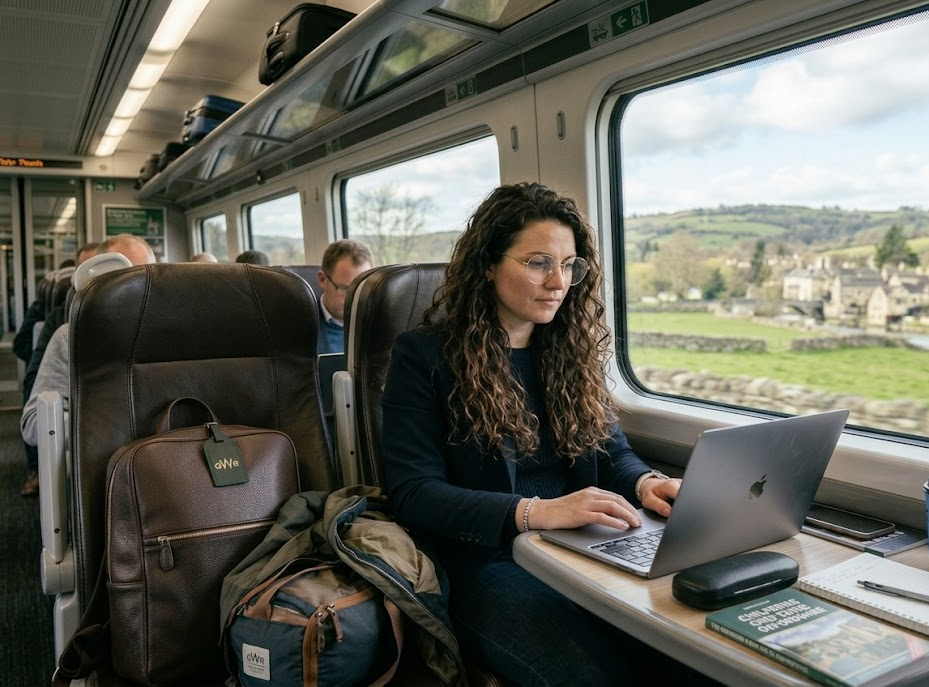
From flexible coworking hubs in the countryside to fully kitted-out caravans doubling as mobile studios, the remote revolution has entered its next phase. And it’s not just about freedom. It’s about performance, wellbeing, and getting real work done wherever you feel most alive.
Hybrid Working Hours and Fluid Workspaces: The New Normal
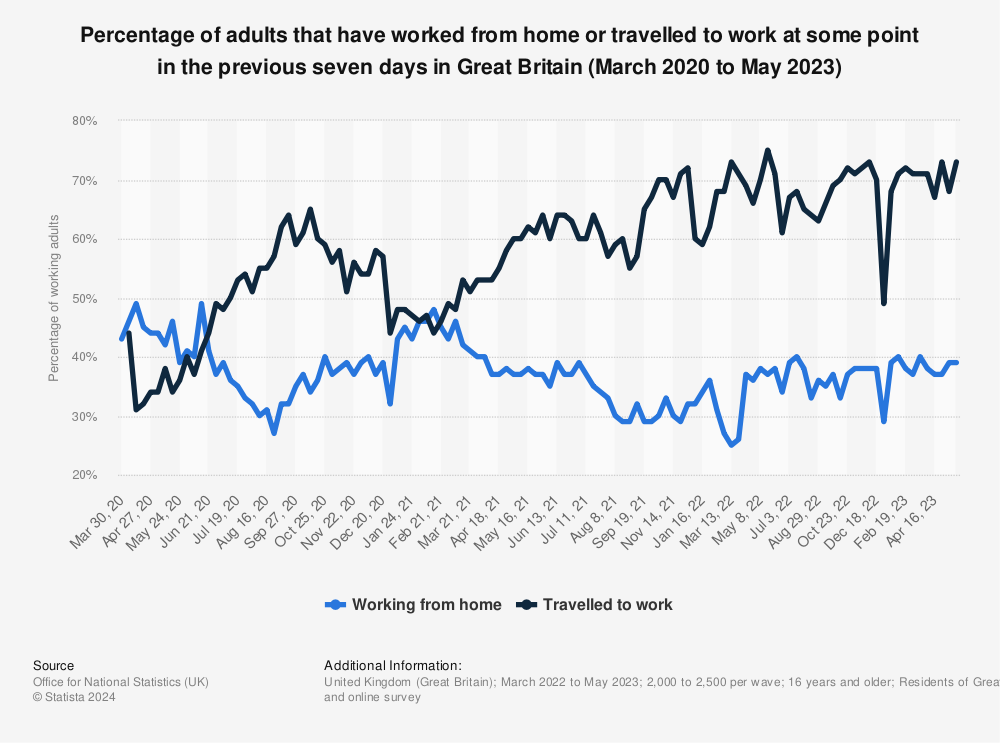
The UK has fully embraced hybrid life. According to the Office for National Statistics, over 40% of working adults in Britain now work remotely at least part of the week. That’s up from just 12% in 2019.
It’s no longer a temporary fix, it’s how businesses work now. And it’s driving companies to think less about desks and more about environments that support people where they are.
People want workspaces that flow with their lives: from sunny city cafés to peaceful rural libraries, even the spare room for meeting days. Fixed offices are no longer the norm.
The idea of spaces being fluid assists people with people wanting to be constantly on the move. Flexible workspaces aren’t just about layout design; it’s a mindset shift. People perform best when they feel in charge of where inspiration strikes.
The Mobile Office Mindset
Picture this: you roll out a desk at the edge of a loch in Scotland. Zoom call over? Grab a kayak. Hungry? Find a pub in the next village. Office life never looked and felt this good.
With over 58% of employers offering remote work to staff. More and more professionals are opting for remote work. Some professionals are taking this even further turning vans, caravans, and motorhomes into mobile offices.
If you are looking to set up such remote work from campervans and motorhomes check out Find My Leisure Vehicle. It’s a game-changer for anyone ready to blend work with wanderlust.
Coworking 2.0: Urban Energy, Rural Calm
Coworking isn’t extinct, it’s evolving. Think shared barns in Devon, converted chapels in Yorkshire, and community hubs in the Lake District.
Mental-health research shows fresh air and green surroundings help mental wellbeing and calms the mind and inspires creative energy.
Research shows 76% of UK workers report feeling more motivated when they have flexibility to work from different locations. It’s clear that the right place powers people.
The Psychology of Space: Why Movement Matters
Workplace design affects behaviour and collaboration. But today, it’s less about desks and more about control – the freedom to choose where your brain works best.
Environmental shifts like changing from grey cubicles to wood-panelled barns refreshes cognition, cuts down burnout and sparks new ideas. It’s like decluttering your mind by changing your background scene.
Challenges and Practical Considerations
Of course, it’s not all scenic views and stress-free schedules.
Connectivity: Some rural spots still struggle with Wi‑Fi. Even tech-enabled vans can run hot on data pressure.
Blurriness: Work and life can merge too seamlessly. Without boundaries, every picnic table becomes a deadline.
HR matters: With nomadic teams, policies need to be reassessed. HR teams struggle fulfilling simple duties like care, health, safety and data security.
The smart response – let mobile be a choice. Provide IT support, clear communication norms, and training and encourage sync tools like chat and file-sharing so location doesn’t hinder progress.
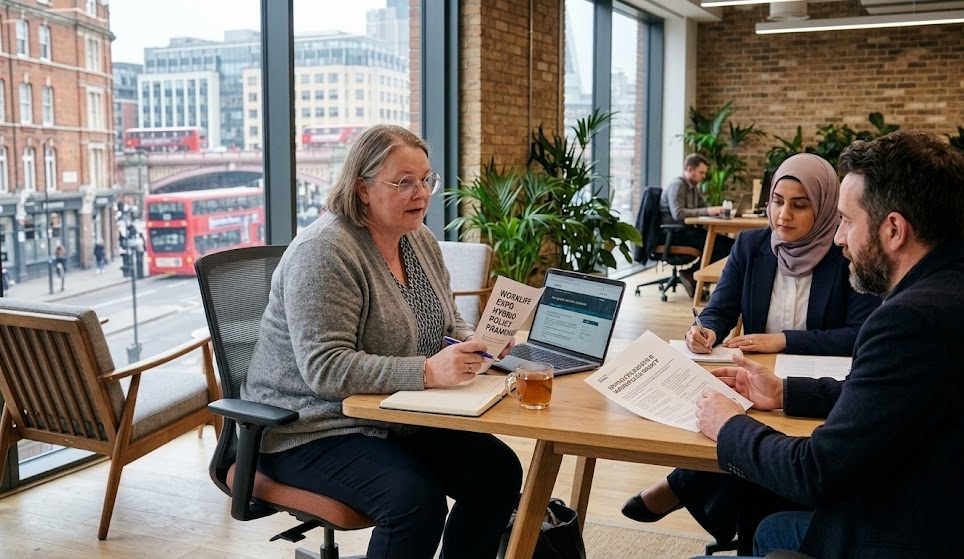
London office support and HR recruitment specialists Morgan Spencer note that demand for experienced HR and office managers has risen sharply as hybrid policies grow more complex.
The Human Element in the Workplace
Hybrid work with its challenges, brings a greater level of employee satisfaction and achievement in the workplace. Some UK companies are embracing this change with benefits like coworking vouchers as standard, while others even pay for van-based deep work.
83% of UK companies now offer hybrid working, and 45% have a formal hybrid working policy. And that includes mobile tech support and rental subsidies. Organisations understand that flexible location means flexible thinking.
For workers, the choice of a workspace makes them feel empowered. Letting people choose where they work is a huge sign you trust and respect their lives as whole.
Future-Facing Advice for HR Leaders
- Craft mobile-friendly policies: Allow people to choose locations and define expectations around check-ins and outcomes.
- Support pairing hubs and hotspots: Offer memberships to coworking spaces near major trains, airports, or scenic towns.
- Invest in remote‑ready tech: Think portable power banks, satellite backup, secure cloud access.
- Pilot mobile labour weeks: Offer 2–3 weeks a year of “choose-your-base” mobility and assess the difference in wellbeing and output.
You might be surprised by what comes back: sharper focus, renewed creativity, and stories worth sharing around the virtual watercooler.
Conclusion: Workspace Is a Feeling, Not a Floorplan
We used to think productivity lived in offices. Now we know it lives in people; and those people work best when they’re trusted to choose the where as much as the how.
Allowing mobile workspaces respects autonomy, honours mental health, and surfaces new forms of collaboration. Whether it’s ticking off a ferry ride through Cornwall or writing code from a converted caravan, geography is becoming an asset not a hurdle.
So here’s to the mobile office revolution, where productivity isn’t tied down, creativity isn’t constricted, and work is allowed to wander as much as we do.
And if mobility isn’t part of your strategy yet, maybe it’s time to roll forward literally.